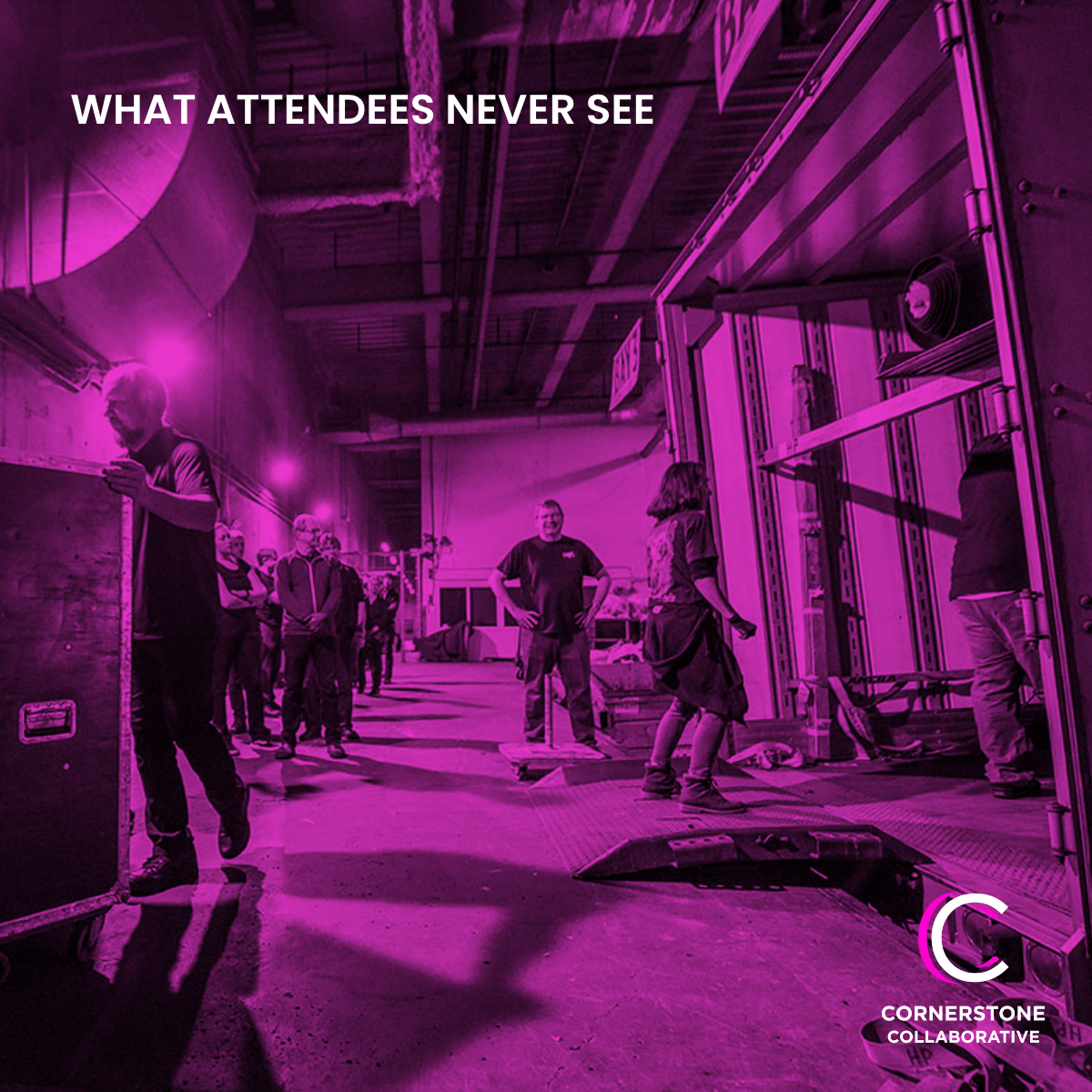
Attendees walk in and see a perfectly set room, a smooth registration process, and a program that starts exactly on time.
What they do not see is the system that made all of it possible.
What Operations Actually Means
Event operations is not the glamorous part of planning. It is not the creative vision or the strategic concept. It is the infrastructure that makes the vision real.
It is the run-of-show document that every team member has reviewed. It is the vendor communication timeline that launched sixty days before the event. It is the contingency plan for the AV failure that no one expects, but every smart planner has already mapped out.
Operations is what happens before the doors open and after the last attendee leaves. It is the unglamorous, completely essential foundation of every great event. And most organizations underestimate it until something goes wrong.
The Gap Between Planning and Execution
There is a version of event planning that looks thorough on paper. The spreadsheet is detailed. The timeline is documented. The team has had multiple check-in calls.
But when execution day arrives, the plan falls apart in ways no one anticipated.
Why? Because planning documents are not the same as operational systems.
A planning document tells you what needs to happen. An operational system tells you how, who, when, and what to do if it does not.
One gives you a checklist. The other gives you a machine.
Organizations that treat operations as an afterthought spend event week in reactive mode. They are solving problems that should have been prevented, answering questions that should have already been answered, and running on stress instead of confidence.
The Four Systems That Actually Matter
After years of planning complex meetings and large-scale events, I have found that the most important operational systems fall into four categories.
Communication Systems. Everyone on your event team needs to know the same things at the same time. This means a single source of truth for all event documents, a clear chain of communication with defined roles, and a protocol for real-time updates during the event itself. Without this, information lives in silos, and teams make decisions without the full picture.
Vendor Management Systems. Your venue, AV, catering, and transportation teams need more than a contract. They need a clear communication timeline, defined deliverables with confirmation checkpoints, and a dedicated point of contact who owns each relationship. A vendor who has not heard from you in three weeks is a risk. A vendor who received a detailed brief and two confirmation calls is a partner.
Contingency Planning. This is the one most organizations skip. Not because they think nothing will go wrong, but because planning for failure feels like predicting it. Think of it like Will Smith’s character in Hitch: the first plan was great, but the backup is what saved the day. Contingency planning is confidence planning. When your team has already thought through what happens if the keynote cancels or the AV fails, they move through those moments with calm instead of chaos.
Run of Show Management. The run of show is the operational heartbeat of the event. It is not just a timeline. It is a minute-by-minute guide that includes cues, responsibilities, transitions, and confirmation checkpoints. A great run of show is so detailed that a new team member could pick it up and execute without needing an extra briefing.
What Seamless Execution Really Signals
When attendees experience a smooth event, they rarely think about operations. They say it was “well-organized.” They comment that everything “just flowed.” They tell you it felt effortless.
That is not luck. That is the result of operational systems built before the first attendee arrived.
The smoothest events I have ever produced were not the ones where nothing went wrong. They were the ones where something went wrong, and the attendees never knew it. Because the system caught it.
Building an Operations Culture
The organizations that consistently run great events are not always the ones with the biggest budgets. They are the ones who have built operations into their planning culture.
They document everything. They communicate proactively. They think through failure scenarios before the event instead of during it. And they treat the run of show as a living document, not a final draft.
This is not a skill that takes years to develop. It takes intention and a willingness to move from reactive planning to proactive systems.
Before your next event, ask yourself: do we have a system, or do we have a plan?
A plan tells you what you want to happen. A system makes it happen.
The Cornerstone Standard
At Cornerstone Collaborative, operations is not a phase of the planning process. It is the entire framework.
Every engagement includes a full operational infrastructure: communication protocols, vendor management timelines, contingency scenarios, and a run of show that accounts for every transition and every cue.
Because when the operational system is built right, the event runs itself.
And that is exactly what your organization deserves.
What operational challenge shows up most often in your event planning process? Drop it in the comments.

